










ARTICLE I. NAME, LEGAL STATUS, AND PRINCIPAL OFFICE
Section A.
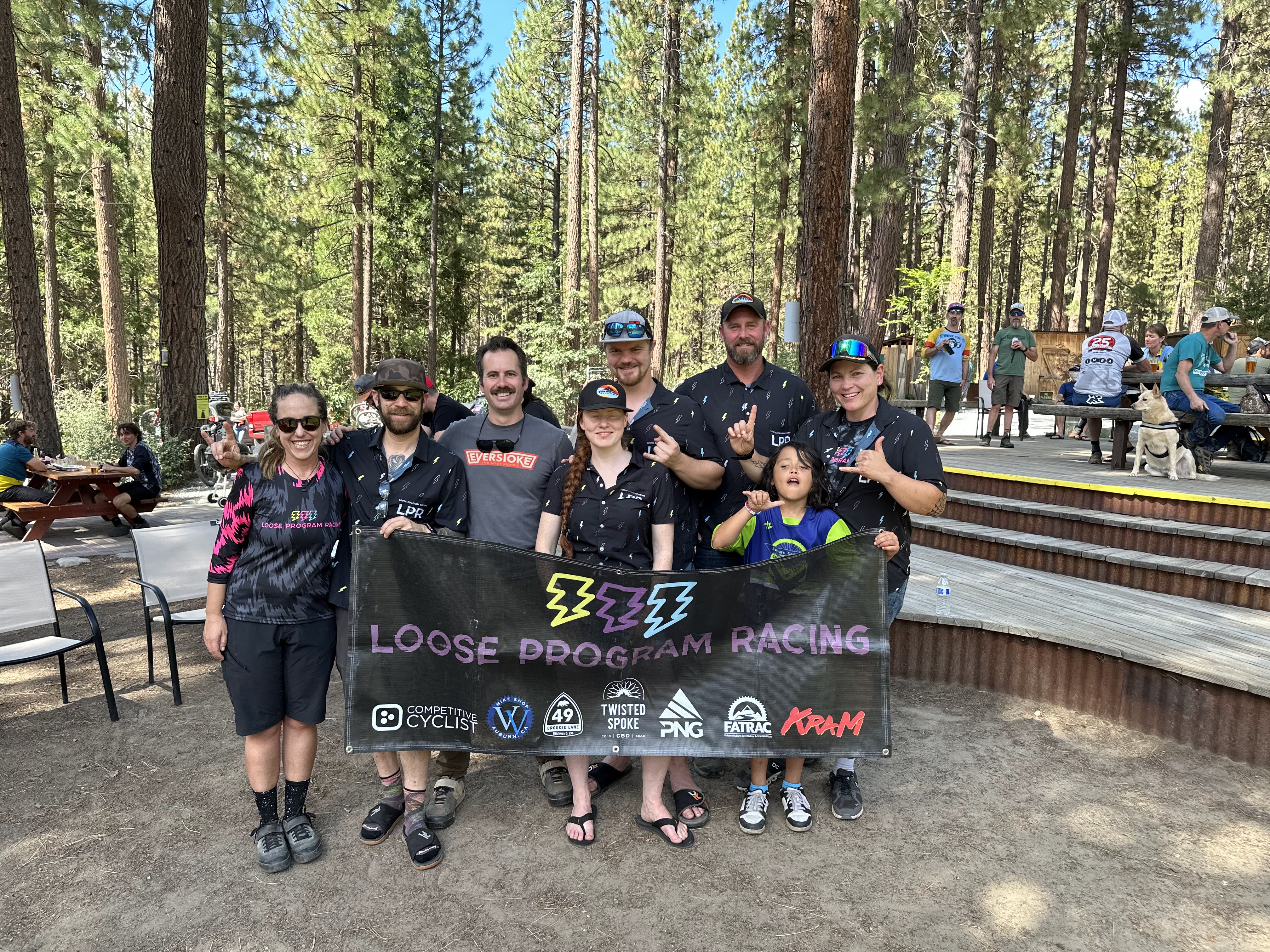
The name of the organization is Loose Progam Racing, Incorporated, and is identified in these bylaws as “LPR.” LPR’s Board of Directors is shown as the “Board.”
Section B.
LPR is incorporated as a not-for-profit corporation under
the laws of the State of California.
Section C.
The principal office of LPR is 12356 Frontera Drive, Auburn, CA,
95603. The Board may change the principal office location within California by
two-thirds vote of approval.
ARTICLE II. CORPORATE PURPOSE
This corporation is organized under section 501(c) (3) of the Internal Revenue
Code.
ARTICLE III. LPR OBJECTIVES AND
ENDORSEMENTS
Section A.
LPR Objectives.
- Promote community within all areas and disciplines of cycling.
- Raise funds to support LPR members and charitable organizations who align with LPRs mission.
- Encourage and facilitate bicycle racing for all riders.
- Increase awareness of inequality in cycling.
- Promote equality and inclusion in cycling.
Section B.
LPR Endorsements. LPR does not support or oppose any political candidate. No membership dues shall be used for political advocacy. Board may endorse ballot measures deemed necessary and advisable to accomplish bylaw objectives. LPR endorsement of any ballot measure, however, must first meet the following criteria:
- At least one week prior to Board deliberation of a measure, a summation of the proposed ballot measure will be posted on LPR’s website. Members will be encouraged to give input to any Board member.
- Board endorsement of a ballot measure requires a two-thirds vote of approval by a quorum of the Board.
ARTICLE IV. MEMBERSHIP
Section A.
Categories of Membership. LPR has the following types of membership:
- Community. Any person who supports the objectives of the LPR and who pays the membership dues are eligible for individual community membership. An individual community member has the option of becoming a Race Team member by paying the supplemental fee.
- Racer. Is a community member that receives support at sponsored events. Support can include: Mechanical support, nutrition and beer supplied by sponsors and/or LPR and race mentorship/pacing. Additionally, there is early registration for CES. To maintain Racer membership individuals must meet the 3 event commitment requirement.
- Honorary. The Board may consider awarding an honorary membership to any person who has rendered extraordinary service, or who has made an outstanding contribution to LPR or bicycling.
Section B.
Voting Rights. Each adult member has one vote on any LPR voting measure or poll.
Section C.
Application for Membership. Prospective members complete and submit applications to the Board for approval by the Board.
Section D.
Admission of Members. In rare instances where the Membership Director determines an applicant may be incompatible with LPR culture or objectives, he/she will forward the matter to the Board for final determination.
Section E.
Expectations and Obligation of Membership. Outside of the Board of directors, LPR is an all-volunteer group and its operational success is dependent on the donated time and labor of its members. Racer Membership status carries with it the understanding that members will volunteer for LPR-related tasks with a minimum obligation of 3 events..
Section F.
Term and Renewal of Membership. Regular membership is for one year. Honorary Memberships are reevaluated and determined prior to each calendar year. New honorary memberships may be created at any time with two thirds vote of the directors.
Section G.
Censure or Termination of Membership. The Board has authority to censure a member or to terminate membership for good cause.
- “Good cause” is defined as failure or refusal to comply with the bylaws, or any act or omission contrary to LPR’s interests or cycling in general.
- A member shall be given the opportunity to respond to the Board’s contemplated action.
- The Board will deliberate after receiving all available information and circumstances of the proposed censure or termination.
- Censure or termination requires a two-thirds vote of approval by a quorum of the Board.
ARTICLE V. MEMBERSHIP DUES
Section A.
Dues Schedule. Dues are assessed and payable on a schedule determined by the Board.
Section B.
Dues Amount. At a scheduled Board meeting in the 4th Quarter of the calendar year, directors will review and revise as needed the fee structure for regular memberships. The Race Team leadership determines its own fee Schedule.
ARTICLE VI. OFFICERS AND DIRECTORS
Section A.
Officers. The Loose Program Officers are President, Secretary, and Treasurer.
Section B.
Board of Directors. The combined officers and directors comprise the Board of Directors. A Board member’s term of office is for one calendar year.
Section C.
Eligibility Requirements. Officers and directors are elected or appointed from members in good standing. A member may not hold more than one Board position at a time.
Section D.
General Responsibilities of Board Members. Board members are responsible for the overall management and fulfillment of LPR objectives. They must be familiar with the current LPR bylaws.
Section E.
General Responsibilities of President:
- Serves as the chief executive officer of LPR and Board Chair.
- Has ultimate responsibility for all LPR activities and operations. In fulfillment of this responsibility, the President is empowered to:
- Create and supervise ad hoc and standing committees.
- Select members to serve on such committees.
- Prepare and publish an agenda of items for discussion by the Board. Agenda circulation should be 3 or more days before the scheduled board meeting.
- Receive committee reports and findings and share those findings with the Board for review and analysis.
- Create and appoint non-Board positions necessary for the good order and performance of LPR, subject to Board approval.
- Fill any vacancy on the Board of Directors, subject to Board approval.
- Perform other duties essential to LPR’s welfare.
Section F.
Responsibilities of Other Board Members
- Vice President. Assists the President and performs the duties and responsibilities of the President when the President is absent or disabled. Should the President leave office for any reason, the Vice President becomes President, subject to Board approval.
- Secretary. Creates itinerary, records, publishes, and preserves the meeting minutes of the board and actions of directors, members, and committees, with the time and place of holding, and the proceedings of such meetings. Certify and keep, or cause to be kept, at the principal office of LPR a copy of the LPR’s Articles of Incorporation and Bylaws as amended to date. The secretary shall have such other powers and perform such other duties as may be prescribed by the board of directors or the Bylaws.
- Treasurer. Responsible for all LPR financial transactions and records. Keep and maintain adequate and correct books and records of accounts of the properties and business transactions of the corporation, including accounts of its assets, liabilities, receipts, disbursements, gains, losses, capital, retained earnings, and other matters customarily included in financial statements. The books of account shall be open to inspection by any director at all reasonable times. Disburse the funds of the corporation as may be ordered by the board of directors; Assist in preparing ECC’s annual budget; Shall render to the president and directors whenever they request it, an account of all transactions as treasurer and of the financial condition of the corporation; File the Club’s tax returns; The treasurer shall have other powers and perform other duties as may be prescribed by the board of directors or the Bylaws.
- Directors at Large. Perform specialized duties as assigned by the President or Board and count as part of a Board meeting quorum.
Section G.
Compensation or Reimbursement. Financial compensation for service will be determined by the Board of Directors. The amount determined must not compromise the welfare of LPR or its mission, but to aid its directors to carry out the mission of LPR. The Board may also authorize reimbursement for expenses incurred in the performance of the duties of a position.
Section H.
Grounds for Dismissal.The Board may remove a director or officer due to incapacity, failure to comply with the bylaws and board member contract,not performing assigned duties, or any act found to be in violation of these bylaws.
- A two-thirds vote of the Board is required for dismissal. Due process provisions required in ARTICLE IV, G, above shall be followed for removal of a director or officer. The Board may appoint a special committee to investigate allegations against an officer or director.
Section I.
Resignation. Any Board member choosing to resign must promptly notify the President in writing.
ARTICLE VII. NOMINATIONS AND ELECTIONS
Section A.
Schedule of Elections. Elections for Officers and Directors shall be held yearly at LPR’s annual meeting in December.
Section B.
Nominations Committee. Before the month of October of each year, the President appoints a Nominations Committee. No Board Member seeking re-election may serve on the Committee. The President may serve as advisor to the Committee if the committee requests it. The Committee recruits a slate of candidates for directors for the following year.
Section C.
Nominating Committee Report. The Chair of the Nominations Committee submits the written slate of nominees to the Board at least 30 days in advance of the December general membership meeting during which elections are held. The slate is then shared promptly with the membership.
Section D.
Election. The Chair of the Nominations Committee conducts the election at the December General Membership meeting. Before the vote, the Chair solicits additional candidates for the Board from the audience. A majority vote of board members present elects the Board for the following year. The Nominations Committee is dissolved upon completion of the election.
ARTICLE VIII. MEETINGS
Section A.
General Membership Meetings. General membership meetings are held at a date, time, and location determined by the Board.
Section B.
Conduct and Schedule of Board Meetings. The current edition of Chip’s Rules of Order will govern the conduct of Board meetings. The Board has the authority to meet on a scheduled frequency that best meets the operational needs of LPR.
Section C.
Special Meetings. The President or any two Board Members may call a special Board Meeting to address an issue of immediate importance to LPR or that is time-critical.
- The President, or designee, convenes and presides over a Special Meeting.
- To gain Board approval of an urgent proposal, Board members may vote via email or text.
- Results of a Special Meeting are announced promptly to the Membership.
Section D.
Quorum for Board and General Membership Meetings. A simple majority of Board members constitutes a quorum at any regular or special Board meeting. A quorum for general membership meetings during which an election is held is more than ½ the number of total members. No proxy voting is permitted.
ARTICLE IX. BUDGET AND FINANCES
Section A.
Budget Preparation for Forthcoming Fiscal Year. The Fiscal Year begins on the first day of March and ends on the last day of February. Early in the 4th Quarter of the calendar year, a Budget Committee of LPR officers is convened, chaired by the Treasurer. Directors and others with budget authority are solicited for input on preparation of a Preliminary LPR Budget for the next fiscal year.
- The Budget Committee prepares a Preliminary LPR Budget for presentation at a Board meeting held during the 4th Quarter of the calendar year. The Board modifies the preliminary budget as needed and approves by resolution.
- The incoming Board will receive and consider the Preliminary LPR Budget at the first Board meeting of the new calendar year. The Preliminary LPR Budget may be approved as written or amended by the Board as required. If the Board deems it necessary, a subcommittee of Board members shall be appointed by the President, to make recommendations for further changes to the Budget. The subcommittee recommendations shall be considered at the next Board meeting. The Board shall approve a LPR Budget no later than the first Board meeting in the new fiscal year.
Section B.
Expenditures. All expenditures must be in accordance with the approved budget. The Board may authorize additional disbursements or transfer funds in support of worthy efforts or to further LPR objectives.
Section C.
Independent Review. The Board will arrange for an independent review of the financial records at least once yearly.
Section D.
Debit Cards. LPR debit cards are assigned to persons designated by the President and are for LPR-related expenses only.
ARTICLE X. BYLAW AMENDMENTS
LPR bylaws can be amended or repealed and new provisions can be adopted by a two-thirds majority of the members present at any general membership meeting. A copy of the proposed changes must be published on the LPR website, and notice of the proposed change must be announced to the membership, at least one month in advance of the membership meeting in which the vote will be taken.
ARTICLE XI. INDEMNIFICATION
Section A.
Indemnification of Directors, Officers, and Other Agents. Any person performing an assigned duty or task on behalf of the LPR is indemnified against incurred expenses brought by a subsequent legal claim of liability. The LPR may assume these expenses, but only in accordance with Section 5238, California Nonprofit Public Benefit Corporation Law.
Section B.
Insurance for Corporate Agents. The Board may adopt a resolution authorizing the purchase and maintenance of insurance on behalf of any agent of the corporation against any liability other than for violating provisions of law relating to self-dealing (Section 5233, California Nonprofit Public Benefit Corporation Law) asserted against or incurred by the agent in such capacity whether or not the corporation would have the power to indemnify the agent against such liability under the provisions of Section 5238, California Nonprofit Public Benefit Corporation Law.
ARTICLE XII. CONFLICT OF INTEREST POLICY
Section A.
Purpose. This Article protects the LPR in any transaction that could benefit the personal financial interest of any member having funding or policy authority.
Section B.
Duty to Disclose. Every LPR member with funding or policy authority must disclose to the Board any potential financial conflict of interest. A member could have a financial interest but no conflict of interest. The Board will determine if a conflict does exist and take appropriate action as appropriate.
Section C.
Failure to Disclose. Failure to make a timely disclosure of a possible financial conflict of interest to the Board is a violation of this policy, and the Board may administer sanctions.
Section D.
Board Responsibility. Upon receiving a report of a potential or actual conflict of interest, the Board will review all available circumstances and render a ruling by majority vote. Board members who are the subject of a conflict of interest deliberation are excluded from Board review and ruling.
ARTICLE XIII. WHISTLEBLOWER POLICY
Section A.
Purpose. Suspected violations of laws or LPR rules, improper use of LPR funds or property, or questionable accounting practices, must have a means to be reported to protect LPR’s integrity, and to deter potential retaliation for such reporting. Similarly, deliberately false or malicious allegations under this policy will be cause for censure, including expulsion from LPR membership.
Section B.
Reporting Procedure. Allegations of improprieties described in Section A, above, may be made to any officer or director. A Board member receiving such information must make a timely report of the complaint to the President. The President determines how to proceed with the complaint and advises the Board members of his/her action. The President shall document all action taken in anticipation of potential litigation. If the LPR President is the subject of the report, the Vice President assumes this responsibility.
Section C.
Retaliation Towards Members. Persons making reports under this policy must not suffer retaliation from any individual under the authority of LPR leadership. Anyone taking retaliatory action will be censured or expelled from the LPR.
Section D.
False Allegations Against Officers and Directors. LPR directors and officers are similarly protected from knowingly false or malicious assertions under the same authority in this Article. LPR members making such reports are subject to similar sanction.
ARTICLE XIV. DOCUMENT RETENTION POLICY
Section A.
Definition. LPR documents are defined as written records produced by members in the context of LPR affairs. The documents may be either paper or electronic.
Section B. Purpose.
Documents identified under this policy must be retained for the time specified in Section C, below. Document retention is essential for historical reference, as well as source material for potential future litigation.
Section C.
Categories of Documents and Retention Period. Tax returns are retained for six years. Financial records are retained for three years. Board minutes are retained for six years.
Section D.
Responsibility for Compliance. Specified directors shown below are responsible for the safe and secure maintenance of current and past records and for transfer of those records to their successors. Tax returns and financial records are the responsibility of the Treasurer. The Secretary is responsible for retention of Board Minutes.
ARTICLE XV. JOINT VENTURE POLICY
Section A.
Definition. For purposes of this policy, a Joint Venture is a contractual arrangement or joint ownership between Loose Program Racing and a business enterprise, investment, or exempt-purpose activity.
Section B.
Compliance. LPR’s non-profit status is preserved when it meets the following provisions:
- A minimum of 95% of the venture’s income for the Organization’s calendar year is excluded from unrelated business income taxation, described in Internal Revenue Code, Section 512(b)(l) -(5), including unrelated debt-financed income.
- The primary purpose of LPR’s contribution to (or investment or participation in) the venture must not be for the generation of income or appreciation of real property.
ARTICLE XVI. NON-STANDARD GIFT ACCEPTANCE POLICY
Section A.
General Policy. No Board member may accept a gift if it benefits only that member without a substantial greater benefit to the LPR’s programs or objectives.
Section B.
Authority and Responsibility. The Board must give prior approval for acceptance of any tangible gift to LPR or Board member, received while in the operation of any LPR activity.
Section C.
Documentation and Inventory. Any non-standard gift received under the conditions described above shall be memorialized in the Board minutes. The gift and its approximate value shall be inventoried, along with the other LPR material assets under the control of the Quartermaster.
ARTICLE XVII. FIRST YEAR OF LPR
Section A.
General Policy. The directors/founders may have more than one title/roll while establishing the team. During this time, Adjustments may be made during each meeting in effort to establish the team.
Section B.
At the end of the first year, the directors will meet and discuss the plan for the following year, reviewing how the board should be structured and defining goals for the upcoming calendar year.
 looseprogramracing.org